Cracking the Code of Cuffing Season

Cuffing season is back, and for many singles, it’s a time of year when finding that special someone to snuggle with during the long, cold winter becomes a top priority. But how do you know if someone is genuinely into you or just looking for temporary companionship until someone better comes along? Jacob Lucas, a dating expert and popular TikTok influencer, has some intriguing insights that might just save you from heartache this cuffing season.

Seeking Your Advice

Jacob emphasizes that a key sign of someone’s genuine interest is when they consistently seek your advice. According to Lucas, they do this for two reasons: they highly value your opinion, and it’s a clever excuse to engage in conversations with you. So, if you find someone turning to you for guidance frequently, take it as a positive sign.

Playful Teasing

Another telltale sign of interest is playful teasing. Lucas suggests that if someone starts joking around with you and engaging in more banter than they do with others, they’re likely trying to build a fun and flirtatious connection. Playfulness often indicates genuine attraction.

Sliding into Your DMs

When someone is regularly creeping into your DMs, it’s a “dead giveaway” that they’re crushing hard, says Lucas. Consistently commenting on your Instagram Stories or sending you memes that remind them of you is a subtle way of initiating a conversation. It’s a clear sign of interest.

Mimicking Your Speech and Slang

If you notice someone trying to copy the way you speak and even mirroring your slang terms, they’re likely drawn to you. It’s a subtle yet effective way to establish a connection and show that they’re attuned to your personality and interests.

Investigating Your Dating Status

Finally, if someone is discreetly trying to find out if you’re dating someone else, it’s a strong indicator of their interest. Lucas suggests that they may be gauging their competition and, in turn, showing their intentions to make you their “bae” for the holidays.

While cuffing season can be a bit daunting, these hints could help you navigate it with more confidence. So, keep an eye out for these subtle signals and enjoy the winter with someone who’s genuinely into you.

2 in 3 Only See a Doctor When Something Feels Extremely Wrong

According to recent research, a significant 64% of Americans adopt a “wait till it’s really bad” approach to seeing a doctor. In a survey of 2,000 people, the majority confessed to being more reactive than proactive about their health.

Men seemed particularly guilty of this, with a whopping 79% admitting they only go to the doctor when things take a dire turn, compared to 59% of women who approach healthcare more sensibly.

In terms of regular checkups, the average respondent was found to have had their last checkup two and a half years ago. High blood pressure and cholesterol screenings? Neglected by 65% and 66%, respectively.

When it comes to crucial screenings like mammograms, pap smears, and prostate exams, a substantial percentage of the population is skipping out. Approximately 75% of women haven’t had these screenings in the past five years, while 70% of men have avoided a prostate exam.

Even among those with insurance, only 48% have gone for a physical exam in the past year. Dental insurance isn’t much better, with just 44% having it, and an average of two years since the last dental cleaning.

But here’s a curious twist – while we may fear the doctor’s office, 78% of respondents do feel comfortable there. And it seems that, for some, a visit to the dentist is less daunting than a trip to the doctor.

However, there’s a need for better trust and personal connections with healthcare providers. A significant portion of Gen Xers “never” trust their doctor’s medical advice, and that’s a concern.

The key message here is the importance of health literacy and strong patient-doctor relationships. A little prevention can go a long way in maintaining good health. So, let’s prioritize our health and well-being, folks. This is your radio voice, signing out.

The High Cost of Working in the Office

Photo by Chris Montgomery: Unsplash

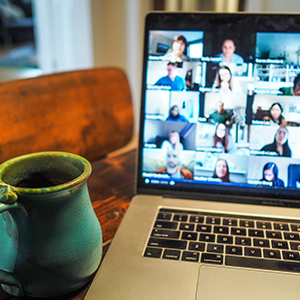
Many of us have traded our cozy home offices for the hustle and bustle of in-person work. If you’ve noticed your expenses creeping up, you’re not alone. Owl Labs, a company known for its video-conferencing solutions for hybrid work, recently published its “State of Hybrid Work” report, and the findings won’t shock you if you’ve been frequenting coffee shops and racking up rewards points.

Owl Labs surveyed 2,000 full-time U.S. employees from companies with at least two workers. Here’s the breakdown: 66% are back in the office full-time, 27% are enjoying a mix of office and remote work, and 7% are fully remote. This represents a significant shift from last year when 41% were in the office, 25% were in hybrid roles, and 34% worked remotely.

Let’s focus on the hybrid workers. About 45% are in the office three days a week, 24% for two days, and 7% for just one day. What’s interesting is that 58% of these hybrid workers admit to practicing “coffee badging.” They show up in the morning, grab a coffee, chat for a bit, and then vanish to work from a more comfortable location.

Now, the money talk. When asked what they’d expect if they had to work in the office every day, 29% of hybrid and fully remote workers said they’d want a pay increase to cover the extra costs. Another 28% hoped for free or subsidized food and beverages at the workplace. Their concerns are valid because the survey revealed that these hybrid workers are spending an extra $51 per day compared to working from home. Lunch is the biggest expense at an average of $16 per meal, followed by commuting costs at $14, breakfast and coffee at $13, and parking fees at $8.

On the bright side, think of all the loyalty programs you can now join at cafes and restaurants. Just remember to keep track of them – or not. It’s all part of the experience, and like many of us, you’ll probably forget most of them anyway. Enjoy your caffeinated workdays!

Goodbye DVDs and Blu-Rays at Best Buy

Photo unsplash.com

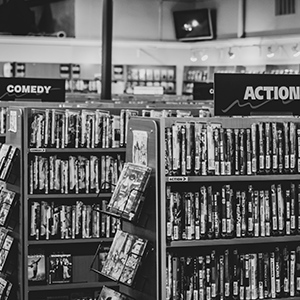
A change is coming to Best Buy. Starting in 2024, they’ll be waving goodbye to physical DVDs, both in-store and online. It’s all thanks to the rise of streaming services, which have made DVDs a bit old-fashioned.

According to a spokesperson from Best Buy speaking to Bloomberg, this shift is about making space for new and exciting tech products. They want to offer you the latest and greatest in technology, rather than traditional DVDs.

Best Buy isn’t alone in this move; it’s simply adapting to the changing times. The way we watch movies and TV shows has transformed. Remember when you had to wait for a movie to release on DVD? Now, you can have instant access with a click.

Streaming is not only more convenient but also more budget-friendly. No need to purchase pricey DVDs or invest in DVD players. For the cost of a single disc, you can enjoy a whole month of content.

The decline of DVD sales is not a recent phenomenon. CNBC data shows an 86% drop from 2008 to 2018. Even Netflix, which once mailed DVDs, has switched entirely to streaming for its massive subscriber base.

Some customers noticed this transition happening in Best Buy stores a couple of years ago. It’s a long-expected change, keeping pace with the digital era.

A.I. May Turn Out to be a Real Power Suck

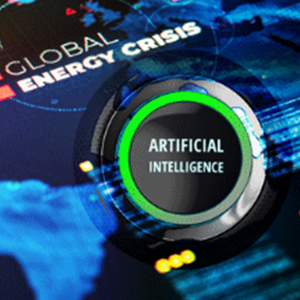
A new study warned that artificial intelligence technology could cause a significant surge in electricity consumption.

The paper, published in the journal Joule, details the potential future energy output of AI systems, noting that generative AI technology relies on powerful servers and that increased use could drive a spike in demand for energy.

The authors point to  Google in one such example, noting that AI only accounted for 10%-15% of the company’s total electricity consumption in 2021.

But as AI technology continues to expand, Google’s energy consumption could start to be on the scale of a small country.

“The worst-case scenario suggests Google’s AI alone could consume as much electricity as a country such as Ireland (29.3 TWh per year), which is a significant increase compared to its historical AI-related energy consumption,” the authors wrote.

They cautioned that such an example “assumes full-scale AI adoption utilizing current hardware and software, which is unlikely to happen rapidly.”

Christopher Alexander, the chief analytics officer of Pioneer Development Group, told Fox News Digital the demands will be similar to the birth of Bitcoin mining, arguing developers will have to get creative with the way they use resources

“AI is very similar to Bitcoin mining. In both cases, processing power is used at very high intensity to solve problems. You cannot lessen the energy consumption, but you can mitigate it,” Alexander said. “For example, alternative energy, like natural gas from oil drilling that is burned off rather than used is a major untapped energy source along with biogas from landfills.”

Alexander likened the solution to when “kerosene was developed from waste,” arguing that this is another opportunity to develop cheap energy from flare gas and landfills that powers the future and makes the most of resources that would otherwise become pollutants.”

Phil Siegel, the founder of the Center for Advanced Preparedness and Threat Response Simulation (CAPTRS), told Fox News Digital that similar concerns are a feature of any growing technology, though he argued that improvements will likely come to help make energy consumption more efficient.

“Multiplayer gaming, social media and cryptocurrency have all gone through these phases. Early on, the technologies tend to be inefficient as the chips and algorithms are not optimized,” Siegel said.

“People extrapolate these inefficiencies to a larger scale. The bad news is that energy usage does increase somewhat. The good news is that as the new uses scale, the chips get better, the algorithms improve, the technology gets more creative, and it eventually lowers the amount of energy usage far below panic levels.”

While the paper acknowledges some of the scenarios are extreme and unlikely cases, it argues that it is important to temper “overly optimistic and overly pessimistic expectations” for the future, noting that “it is probably too optimistic to expect that improvements in hardware and software efficiencies will fully offset any long-term changes in AI-related electricity consumption.”

“These advancements can trigger a rebound effect whereby increasing efficiency leads to increased demand for AI, escalating rather than reducing total resource use,” the paper’s conclusion states.

“The AI enthusiasm of 2022 and 2023 could be part of such a rebound effect, and this enthusiasm has put the AI server supply chain on track to deliver a more significant contribution to worldwide data center electricity consumption in the coming years.”

Source: https://tinyurl.com/3mjtx2xt

Coin toss not so random after all, says groundbreaking study

Photo: unsplash.com

Hey there, fellow coin-flippers and chance-takers! Remember the days when we used to whip out good ol’ coins to make those snap decisions? Well, it turns out our trusty coins might not be as random as we thought.

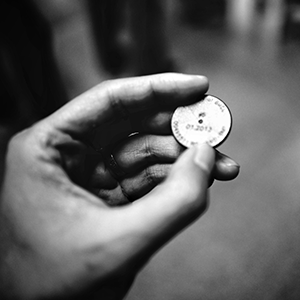
A new study has shaken the world of coin flipping by revealing a “slight tendency” for coins to land on the same side they started from. Yeah, you heard that right. They’ve done the math, and after more than 350,000 coin flips, it turns out that those little discs chose their original side 51% of the time, just slightly above our traditional 50/50 notion. It might not sound like a big deal, but hey, in the world of statistics, every percentage point counts – just ask the casinos!

Now, before you start worrying about where to grab lunch based on this revelation, rest assured that a coin flip is still pretty random for everyday decisions. But when it comes to high-stakes situations like gambling, where the odds matter, this newfound “same-side” bias could make a difference.

This isn’t the first time someone pointed out this odd coin behavior. Back in 2007, Stanford researchers had already sniffed out this tendency, also at 51%. But here’s the kicker: in both studies, the coins were caught mid-air, no bouncing. If you give your coin a hearty slap on the table or your hand, it’s a different story – you might get the reverse of the same-side bias.

The study involved coins from all over the world, so it’s not about any specific currency’s design. So, if you still want to keep your coin flips thrillingly random, remember to let them bounce or, for extra suspense, give that coin a good shake in your cupped hands first. That way, you’ll never know which side is up! Happy flipping!